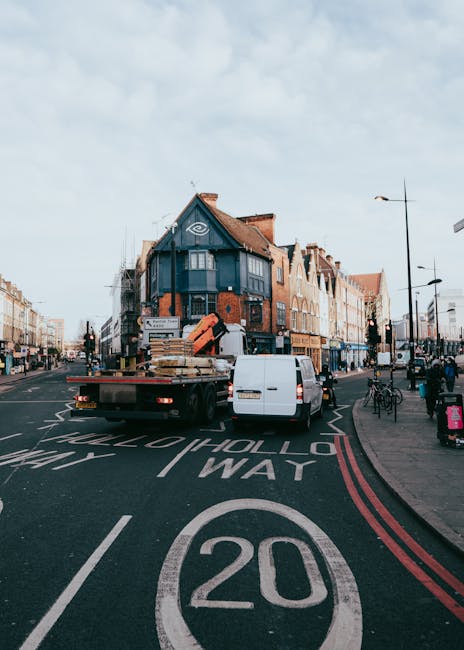
West End Lane moving tips for removal vans
Posted on 10/06/2026
West End Lane Moving Tips for Removal Vans
Moving on or around West End Lane can feel deceptively simple until the van arrives and real-life London realities kick in: narrow streets, awkward parking, stairs that seem to multiply, and neighbours who would quite like the world to stay quiet before 8 a.m. If you are looking for practical West End Lane moving tips for removal vans, this guide walks through what actually helps on moving day, what catches people out, and how to plan so your move feels controlled rather than chaotic.
Whether you are shifting from a flat near the station, moving a family home, or relocating a small office, the best approach is the same: plan access properly, pack with the van in mind, and choose the right level of removal support. A little preparation goes a long way. Truth be told, it can save you a lot of lifting, waiting, and unnecessary stress.

Why West End Lane moving tips for removal vans Matters
West End Lane sits in a part of London where access can change block by block. One building offers a broad frontage and sensible kerb space; the next has a tight turning point, resident bays, or a stairwell that is not exactly box-friendly. That is why generic moving advice often falls short here. A removal van is not just a vehicle; it is part of a timing, loading, parking, and access plan.
Good moving tips matter because they help you match the size and timing of the van to the reality outside your front door. If you get that wrong, even a well-packed move can stall. The crew may spend more time waiting for access than carrying furniture, and small delays can quickly stack up. Nobody wants the sofa balanced in a hallway while someone checks whether the bay is free.
For residents and businesses alike, the biggest win is reducing friction. That includes knowing where the van can stop, which items need extra protection, and whether a man with a van in West Hampstead style service is sufficient or whether a larger vehicle and full team make more sense. The right plan depends on the property, the load, and the distance between door and vehicle.
How West End Lane moving tips for removal vans Works
At its simplest, a good move follows three stages: prepare, load, and transport. But on West End Lane, the difference between a smooth move and a messy one is usually the preparation stage. You are not just packing boxes. You are making sure the route from room to van is clear, safe, and quick enough for the team to work efficiently.
Start with the practical basics. Check the building access. Measure doorways if you have bulky furniture. Identify whether there are stairs, lifts, or tight corners. Then look outside. Is there a loading area? A legal bay? A place where the van can wait without causing a problem? These small details decide whether the removal van can work close to the property or whether everything needs to be carried farther than expected.
Next, think about vehicle choice. A smaller van is easier to position in a tight street, but it may need more trips. A larger removal van service in West Hampstead can move more in one go, but it needs better access and more room to manoeuvre. There is no one-size-fits-all answer, which is mildly annoying, but also useful if you choose carefully.
Finally, the move itself should follow a sensible loading order. Heavy, sturdy items go in first. Softer items, fragile boxes, and anything you will need immediately should be loaded where they can be reached easily. A seasoned crew will balance weight in the van, protect edges, and secure items so they do not shift en route. That last bit matters more than people realise. A box that slides once can bruise a corner, dent a surface, or create a chain reaction of wobbling luggage.
Key Benefits and Practical Advantages
Planning a move with removal vans properly is not just about avoiding drama. It gives you real advantages on the day and in the days before it.
- Less waiting time: If the van can park and load efficiently, the whole move tends to run more smoothly.
- Better protection for belongings: Correct packing and sensible loading reduce breakage and scuffs.
- Lower physical strain: When routes are planned, there is less carrying, awkward lifting, and unnecessary back-and-forth.
- More accurate quoting: Clear information about access and volume helps with reliable pricing and scheduling. See also pricing and quotes for how a proper estimate is usually put together.
- Less disruption to neighbours: Efficient loading helps keep noise and obstruction to a minimum.
There is also a psychological benefit, and this is not small. Moving day feels far less overwhelming when you know where the van is going, how the furniture is being handled, and who is doing what. You stop firefighting. You start following a plan.
For families, that might mean children can stay in one room with essentials until the last minute. For students, it might mean a one-trip move from a shared flat. For office relocations, it can mean keeping the business running with minimal interruption. If your situation is more complex, the broader removal services in West Hampstead overview is a helpful place to compare what support is available.
Who This Is For and When It Makes Sense
This guidance is useful for almost anyone moving in the West End Lane area, but it is especially relevant if your property has limited access, limited parking, or a large amount of furniture. If you are moving from a top-floor flat, you will feel the difference straight away. Every extra step matters. Every extra trip matters too.
It makes sense for:
- Flat movers who need to work around stairs, lifts, or shared entrances
- Households moving from a family home with heavier furniture
- Students needing a low-cost, efficient move for boxes and bags
- Office teams relocating equipment, files, and desks
- People with specialist items such as pianos, artwork, or awkward furniture
- Anyone on a tight timeline who needs the van to be used well from the first minute
If you are in a smaller home or only have a few items, a man and van West Hampstead option may be enough. If you are moving a full household, you will probably be better off with a more structured service such as house removals in West Hampstead. Simple move, different tools. That is the honest version.
And if your move is happening quickly, perhaps because completion times shifted or you have had a last-minute change of plan, a same-day removals service may be the practical rescue rather than a luxury. Not ideal, but sometimes moving life does not give you a neat timeline.
Step-by-Step Guidance
Here is the part that makes the biggest difference: a structured process. You do not need a spreadsheet the size of a railway timetable, but you do need some order.
- Survey the property and street access. Check the number of floors, stair width, lift size, entrance width, and whether the van can park nearby without blocking traffic.
- Decide what is actually moving. Split items into furniture, boxes, fragile pieces, and anything that may need storage or special handling.
- Choose the right van size and crew. Smaller jobs may suit a lighter vehicle; bulkier moves usually need a larger team and more space.
- Pack by room and priority. Put the essentials box aside, label clearly, and keep similar items together. If you need practical materials, browse packing and boxes in West Hampstead.
- Protect fragile and valuable items. Use wrapping, padding, and clear labels. Do not leave corners exposed and hope for the best.
- Plan loading order. Put heavy furniture and durable boxes in first, then fragile or lighter items, with essentials easy to reach.
- Confirm timings and access instructions. Share any door codes, concierge details, parking restrictions, or narrow access points in advance.
- Prepare the old and new property. Clear hallways, secure pets, protect floors if needed, and make sure utilities and keys are ready.
- Do a final walk-through. Check cupboards, loft spaces, under beds, meter cupboards, and behind doors. You would be surprised what gets left behind. Honestly, even the pros have the odd "oh no, the kettle!" moment.
For larger or more delicate pieces, such as dining tables, wardrobes, sofas, and glass-fronted cabinets, consider whether specialist handling is needed. The furniture removals service can be useful when standard box-and-bag logic just does not cut it.
Expert Tips for Better Results
Good moving advice often sounds obvious after the fact, which is annoying but true. The trick is applying it before the van turns up.
Tip one: reduce the number of loose items. Loose lamps, plant pots, small frames, and random kitchen bits are the things that create friction on moving day. Group them early. One box of "miscellaneous" is okay. Seven is not.
Tip two: label with destination and priority. A label that says "Kitchen - open first" is far more helpful than "Kitchen." Small change, big gain.
Tip three: keep one essentials bag with you. Put in keys, chargers, medication, documents, snacks, toilet paper, and a change of clothes. The glamorous side of moving, clearly.
Tip four: think about timing. Early starts often work best in busy London streets. Morning loading can help avoid later congestion, and you are less likely to be rushing with tired brains and too much coffee.
Tip five: speak up about awkward items. If you have a piano, antique mirror, oversized wardrobe, or fragile artwork, mention it early. A specialist like piano removals in West Hampstead is there for a reason: these items need careful handling, not optimism.
Tip six: use storage if your dates do not line up. Completion dates and key handovers do not always match neatly. If that sounds familiar, storage in West Hampstead can bridge the gap without forcing a rushed compromise.
Expert summary: The smoothest West End Lane moves are rarely the fastest to plan, but they are almost always the easiest to live through. Get access, packing, and van choice aligned early, and the rest becomes much more manageable.

Common Mistakes to Avoid
Most moving headaches come from a small set of predictable errors. The good news? They are avoidable.
- Underestimating access restrictions. A van may fit legally somewhere, but if it cannot stop close enough to load efficiently, the job gets harder quickly.
- Packing too late. Last-minute packing leads to poor box quality, weak labels, and forgotten items.
- Choosing the wrong vehicle size. Too small means extra trips. Too large can be harder to manoeuvre and may not suit the street layout.
- Ignoring weight distribution. Heavy items should not sit awkwardly on top of lighter boxes. That seems obvious, but it still happens.
- Not checking lift or stair access. Some furniture simply will not turn a corner the way you think it will.
- Failing to ask about insurance and responsibility. You should understand what is covered and what the service expects from you. Read insurance and safety guidance before moving day if you want a clearer picture.
- Leaving booking details vague. "Morning-ish" is not a plan. Neither is "I think the street is fine."
Another common mistake is forgetting the human side. If you live in a shared building, tell neighbours and manage noise where you can. It costs nothing, and it tends to make the day calmer. Little things, but they matter.
Tools, Resources and Recommendations
You do not need fancy equipment to move well, but a few practical tools make life easier.
- Strong boxes: Use a mix of standard and small boxes so you do not overfill and strain them.
- Packing tape and labels: Clear labels save time on unloading and help you prioritise rooms.
- Protective blankets and wraps: These are useful for furniture edges, mirrors, and delicate surfaces.
- Trolley or sack truck: Great for heavy boxes, especially where the route is smooth and accessible.
- Floor protection: Handy in shared hallways or if it has been raining and people are tracking in grit.
- Inventory list: A simple note on your phone is enough for most people.
On the service side, it can help to compare the broader support options before you book. A clear services overview can help you decide whether you need a full removal team, a smaller vehicle, or something more flexible. If you are still weighing up providers, removal companies in West Hampstead is a sensible place to look at service types in context.
For smaller jobs, especially when you are moving a few rooms or a lighter load, removal services in West Hampstead may be the most efficient route. For a quick, modest-scale move, the local removal van option can be a practical fit without overcomplicating matters.
Law, Compliance, Standards, or Best Practice
Moving day in London is not just about convenience. There are practical and legal expectations around parking, loading, access, and safe handling. You do not need to become a parking enforcement expert, but you do need to avoid assumptions. If a bay has restrictions, if a footway needs to stay clear, or if a building has its own move-in rules, those rules should be respected.
From a safety perspective, best practice is straightforward: use proper lifting technique, avoid overloading boxes, secure items inside the van, and keep walkways clear. Good removal firms typically work with sensible health and safety processes and clear communication. It is worth checking a provider's health and safety policy if you want reassurance on how they approach risk.
There is also a trust angle. Transparent communication about terms and conditions, payment and security, and the business itself matters more than people think. The best move partners are clear, straightforward, and not mysterious in the wrong way. You should know what is included, what is excluded, and what happens if plans change.
If sustainability matters to you, it is fair to ask how unwanted items are handled. A responsible approach to recycling and sustainability can reduce waste and help you pass on usable items rather than sending everything straight to disposal.
Options, Methods, or Comparison Table
Here is a simple comparison of common moving approaches so you can match the right method to your situation. Nothing fancy. Just useful.
| Option | Best for | Strengths | Watch-outs |
|---|---|---|---|
| Man and van | Small to medium loads, quick local moves | Flexible, often efficient for short distances, less complex booking | May not suit large furniture sets or heavier loads |
| Dedicated removal van | Household moves, bulky items, fuller loads | More space, better organisation, usually better for mixed items | Needs suitable parking and access |
| Full removals team | Entire homes, fragile items, time-sensitive moves | Less lifting for you, better handling, often more structured | Usually more planning required |
| Storage plus move | Gap between dates, downsizing, staged moves | Flexible timing, less pressure on completion day | Needs clear inventory and budget planning |
For students, the most practical route is often a lighter service with limited volume. The student removals option is designed for that kind of move, where boxes, a desk, bedding, and a few essential pieces are the main load. For larger properties, a proper flat removals service usually makes more sense because stairs, shared entrances, and room access become the real challenge.
Case Study or Real-World Example
Imagine a small two-bedroom flat off West End Lane. The residents have a sofa, dining table, bed frames, about twenty boxes, a bicycle, and a few awkward lamps. The building has a narrow entrance and shared access, but there is a loading area close by if the timing is right. Nothing extreme. Just a typical London move with a few little traps hiding in plain sight.
The move goes better because the couple did three things in advance. First, they photographed each room and made a simple inventory. Second, they packed by room and labelled the boxes with both destination and priority. Third, they told the removal team about the stairwell and the loading bay before the booking was finalised. That meant the crew came prepared with the right van size and enough hands for the heavier pieces.
On the day, the loading was steady rather than frantic. The sofa went in first with protection on the corners. The boxes followed in groups, and the essentials bag stayed with the clients. There was a moment of mild panic over a missing lamp shade - there usually is one - but it turned out to be in the hallway cupboard. Small win. By early afternoon, they were unpacking the kitchen and listening to the sound of tape being peeled off the last box. Not glamorous, but calm. And calm is what you want.
If that kind of move sounds close to your own, it is worth talking through details early. You can start with the local about us page to get a better sense of the company's approach, then use the contact page if you are ready to ask about your specific property and dates.
Practical Checklist
Use this before moving day. Keep it simple and visible.
- Confirm the move date and time
- Check access at both properties
- Measure large furniture and key doorways
- Arrange parking or loading space where possible
- Pack fragile items separately and label them clearly
- Prepare an essentials bag for the first night
- Defrost and empty the fridge and freezer if needed
- Protect floors, corners, and doors in shared areas
- Keep keys, documents, and phone chargers with you
- Tell the removal team about stairs, lifts, or awkward items
- Set aside items for donation, recycling, or storage
- Do a final sweep of cupboards, lofts, and drawers
Quick reminder: the best checklist is the one you actually use. A neat note on your phone is better than a beautiful printed plan left on the kitchen counter.
Conclusion
Moving on West End Lane does not have to be a scramble. If you understand access, choose the right type of removal van, pack with purpose, and keep the process realistic, you can take a lot of pressure out of the day. The most successful moves are rarely the fanciest ones. They are the ones where the basics were handled properly.
To be fair, that is the whole secret here: good planning beats last-minute heroics. Once you have your route, load, timing, and support sorted, the rest becomes manageable. Even the slightly awkward bits.
Get a free quote today and see how much you can save.
And if you are still shaping the move, take one calm step at a time. That usually works better than trying to solve everything before breakfast.